How Casino Scenes Work on Screen
Learn how casino scenes shape screen stories through sound, movement and character choices, so you can tell when the venue matters to the action.
Why does a casino scene feel convincing in one film and like set dressing in another? A casino scene works best when the room changes what a character can hear, notice or choose. Watch those practical details, and the venue’s role in the story becomes clearer.
Room and action
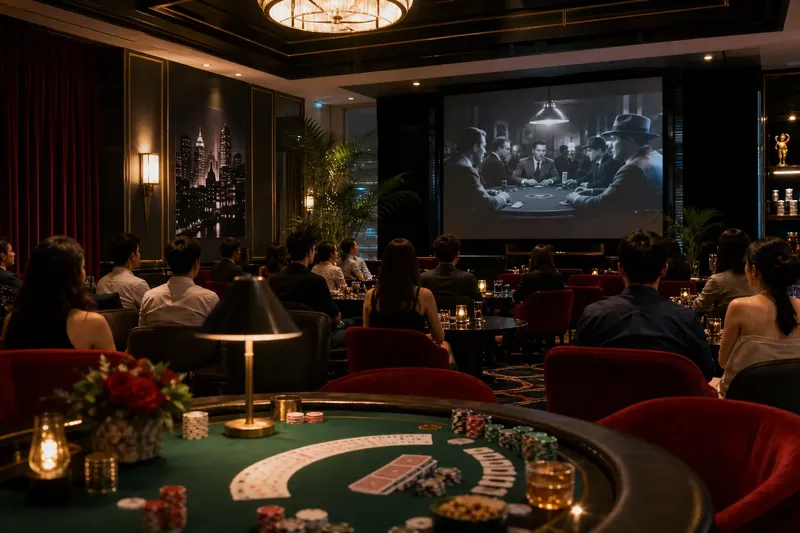
A casino gives a scene several competing rhythms: conversation, staff routines, footsteps and the movement around tables. The writer and director can use that activity to shape a character’s immediate problem. Someone trying to deliver a quiet warning may need to wait for a lull; someone looking for a familiar face may be distracted by the crowd.
That makes the venue more than a backdrop. Its layout can separate people, bring them into view or give them a reason to cross paths. A scene feels grounded when characters respond to the room rather than behaving as if they are in an empty studio.
For viewers, the useful question is not whether every detail is accurate. It is whether the setting affects the scene’s choices. A dealer’s call, a sudden interruption or a character’s attempt to keep a conversation private can all change the pace.
Sound and attention
Sound often does quiet dramatic work. A conversation partly lost beneath surrounding noise can make a character ask someone to repeat a line, move closer or abandon a subject. Each response reveals something about their priorities, and the audience has a reason to attend to the soundscape.
Notice what the mix brings forward. If the background fades whenever a character speaks, the venue may be present mostly as visual decoration. If sound interrupts, competes with or alters the exchange, it is helping tell the story.
Camera choices matter too, but they are most revealing when tied to action. A shot that follows a character’s attention across the room can show what they fear or want. A repeated image means more if it coincides with a change in their behaviour.
Choices under pressure
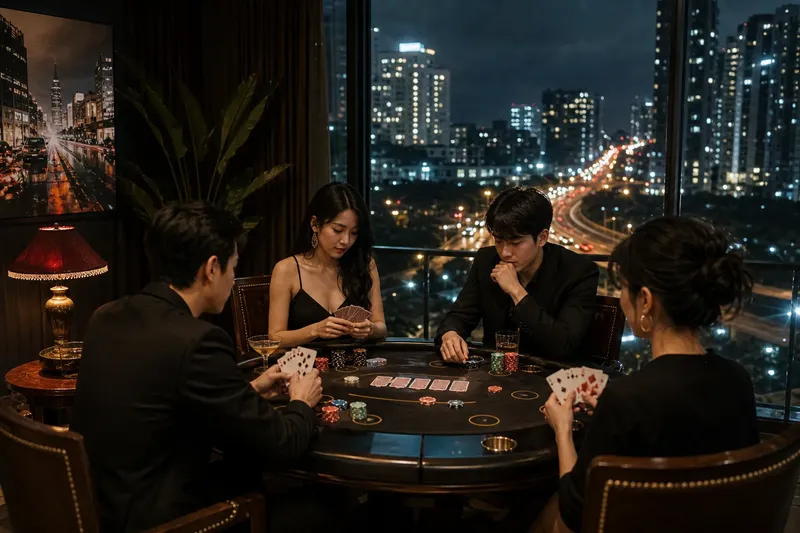
Casino scenes can create tension without making the game itself the point. A character might be deciding whether to approach someone, reveal information or leave. The public setting can complicate that choice because other people are nearby and the character must manage appearances.
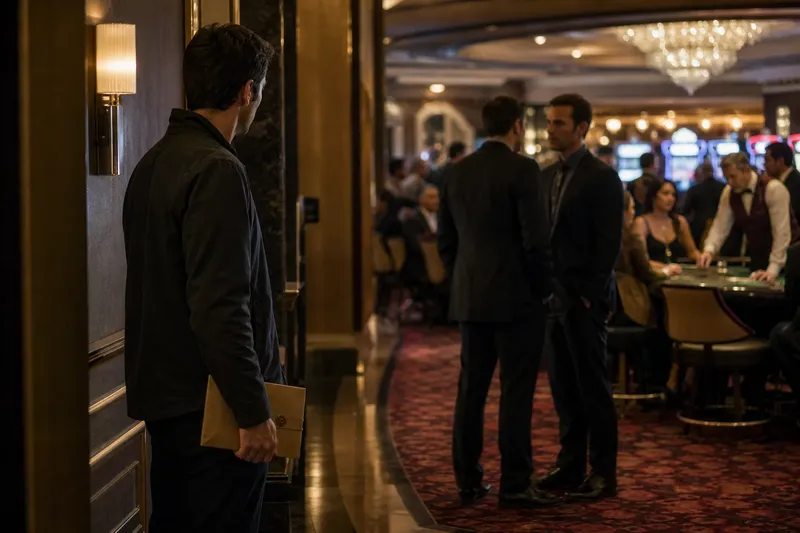
Imagine a fictional film scene in which a courier arrives at a casino lounge carrying a sealed envelope and sees the intended recipient speaking with a colleague. The courier first waits near the entrance, then moves to a quieter corridor when the lounge noise makes a greeting hard to hear. The observable result is that the delay gives the colleague time to leave, changing the meeting from a simple hand-off into a choice about whether to follow or abandon the delivery. The venue earns its place because its sound and movement alter the courier’s options.
What should viewers ask?
How can I tell if the casino matters?
Ask whether the room changes what a character can do or learn. If the scene would play differently because of its noise, layout or public setting, the venue is part of the storytelling.
Does a casino scene have to show gambling?
No. A casino can provide a meeting place or a social setting without making a game central. What matters is whether the location’s specific conditions affect the characters’ interaction.
Why do films linger on tables and corridors?
Those images can orient viewers or draw attention to a character’s focus. They become more meaningful when the character reacts to them or when the images return alongside a change in the action.
What makes a scene feel like set dressing?
If the casino appears briefly and nothing about its sound, routines or layout affects what follows, it may be decorative. That is not automatically a flaw, but it gives the setting less dramatic work to do.
Useful viewing clues
- Listen for interruptions: If room noise cuts across a line and changes the conversation, the scene is using sound; if every exchange stays effortless, the venue may be mostly visual.
- Track movement: If a character changes position to find, avoid or approach someone, the layout shapes the action; if movement has no consequence, treat it as atmosphere.
- Watch for staff routines: If a staff member’s action pauses or redirects a conversation, the venue has a practical role; if staff appear only in passing, they may be background detail.
- Notice repeated images: If a table, doorway or reflection returns as a character’s decision changes, consider a visual pattern; if it appears once without affecting the scene, read it as orientation or decoration.
- Check what follows: If being in the casino leads to a new obstacle or choice, the location contributes to the plot; if the next event would happen unchanged elsewhere, its role is limited.
- Compare the character’s behaviour: If they adjust their voice, timing or attention to fit the room, the setting is influencing them; if they act as they would anywhere, focus on other sources of meaning.
These clues can point in different directions at once. A casino may shape a conversation and also reflect a character’s unease. Rather than forcing one label onto the scene, notice which effect is most visible in the action.
Different scene purposes
Some scenes use the casino chiefly as a social environment, where people with separate aims share a crowded space. Others focus on a character’s response to the setting, using their attention and decisions to carry the emotional weight. A brisk plot may simply need a place for two characters to meet.
None of those choices is automatically stronger. A short scene can be effective if it serves its purpose, while a longer one can feel empty if it repeats familiar images without changing the characters’ situation. The useful distinction is whether the venue is shaping action, guiding attention or merely providing a location.
Next time you watch a casino scene, look for the moment when the room alters a choice. That is often the clearest sign of the casino scene’s dramatic function, and it gives you a more precise way to judge the craft than the setting’s glamour alone.